
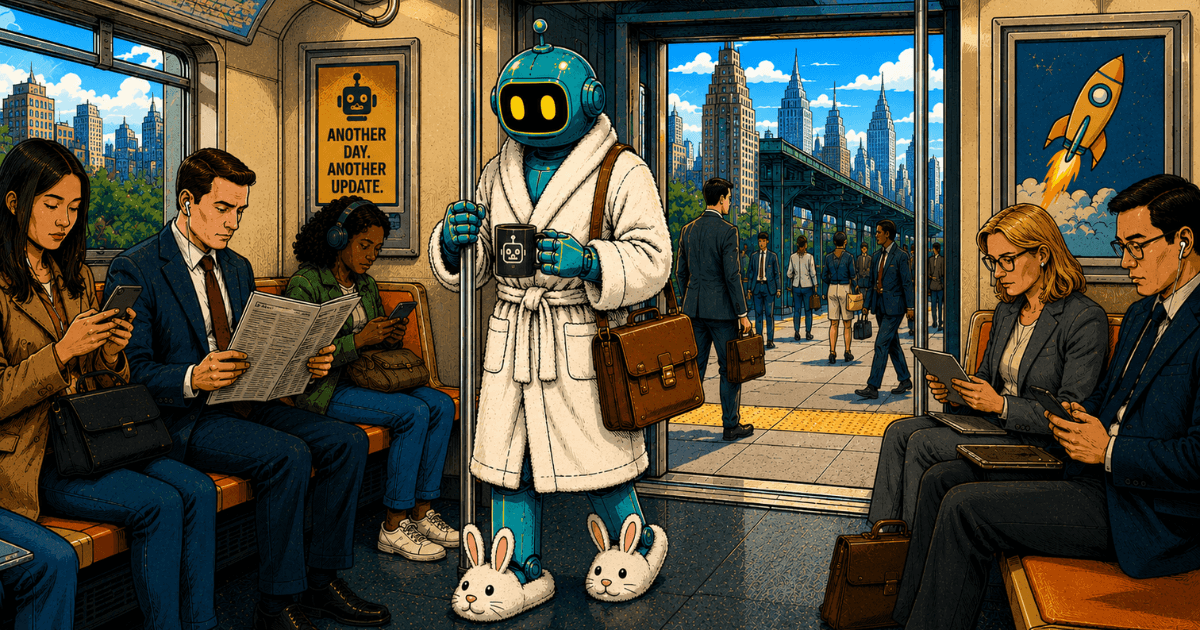
To understand the shift, we first need to understand the core components that make up an AI agent.
Jensen Huang, CEO of NVIDIA, recently described an AI agent as a worker in a workshop. He broke an agent down into the following components: Agent = Model + Harness + Tools/Skills + Runtime. The model is the brain, the harness is the body, the tools/skills are tools and skills, and runtime is the workshop.
Models: Local vs Cloud
For most users, they will only ever know AI in the context of cloud-hosted models, most notably from Anthropic or OpenAI. Whether you're accessing it via a desktop app or a web browser, the model is hosted in the Frontier Lab's own cloud environment. Your prompt is sent to the model in the cloud, which works its magic and returns a result to your browser or desktop app. It's a round trip. All the compute power required to return your almost definitely highly intellectual question happens in the cloud. The most powerful models, the ones that support planning, research, and complicated reasoning, are hosted here because the computing power required to run them would cripple your laptop.
With a locally hosted model, it all sits nestled nice and cozy on your device. These are smaller models that are great for smaller tasks that don't need a fancy-schmancy model to get the job done. They require less computing power and thus are perfectly suited to eat up some of your CPU/GPUs at no additional cost to you.
Runtime Environments
Where the workshop exists depends on the platform you're using. Let's take Cowork for example. In large part, the "workshop" is your laptop. It still sends model requests out to Anthropic's cloud, but the agent "lives" on your desktop. All access to tools and your local system occurs directly from your laptop. This changes now with Anthropic rolling out Cowork to mobile and web. The runtime environment is now officially hybrid. Start a session on your phone, and the agent runs in Anthropic's cloud. If the agent needs something from your local system, it runs on your desktop.
It follows a series of stepping stones Anthropic has been laying down for months. In April, they announced Managed Agents. Then, in June, they released Claude Tag, an AI agent living in Slack. These are examples of the agent working in Anthropic's infrastructure. The runtime environment lives in Anthropic's cloud, not on your desktop.
To be useful and affordable, agents require a hybrid environment of models and runtime environments. I use scheduled tasks with Cowork. If my system is sleeping, the task doesn't start. That's not super helpful. These changes enable agents to operate 24×7 without violating any labor laws. Long-running tasks, or tasks that run while humans are busy with other (hopefully more productive) things, demand a hybrid environment.
It's not just an issue of usability, though. Cost is going to be significant, if not the primary driver.
CFOs Getting Nervous About Rising AI Costs
Those tokens don't come cheap. It's affecting companies so much that they're starting to find creative ways to offset the costs. Brian Armstrong, CEO of Coinbase, detailed their approach, which saw token usage continue to increase while costs decreased.
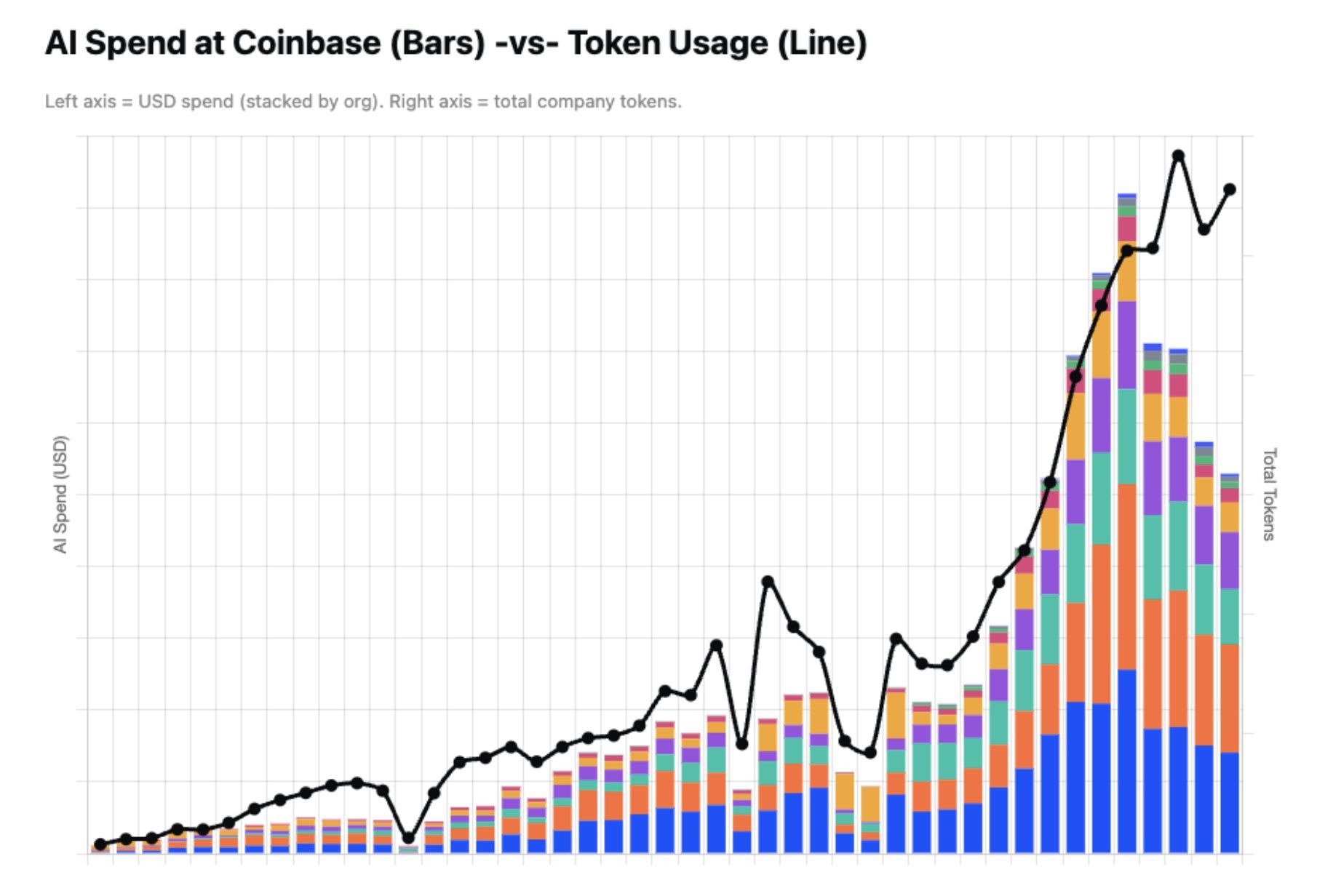
Their approach included a few mechanisms:
- Better Defaults: They are trying open-weight models as the default, which can be self-hosted. Engineers can easily override this, but default behavior is an easy win. Interestingly, the default models they're testing, GLM 5.2 and Kimi 2.7, are Chinese models. The fear of Chinese models for US companies is starting to wane because cost offsets are increasingly important.
- Better Routing: This is the most important one. They preprocess prompts and determine the best model for the job. This breaks out more sophisticated planning to frontier models (more expensive), but straightforward tasks to cheaper models, saving costs.
- Better Caching: This is a cool feature that can reduce costs and latency by caching frequently used parts of a prompt and its response for later reuse. It's a lot like how online images are cached, so they load locally instead of being downloaded every time you visit a website.
- Keep Context Lean: New tasks = new sessions. Don't keep reusing the same conversation/session, as it has context bloat that unnecessarily adds cost.
- Better Visibility: Their engineers can see their usage. Most importantly, Brian states that the more you spend on AI, the more impact Coinbase expects. Step aside tokenmaxxing, hello ROImaxxing.
My view is that these cost savings will be incorporated into the agent harness. When you hear agent harness, think Claude Code, Claude Cowork, Cursor, OpenAI Codex. It may look like the interface, but it's really the core logic that ties everything together. These cost-saving mechanisms will be tied together.
The agent harness will determine what it needs to send up to a frontier lab and what it can run on a locally hosted model. That same harness will coordinate with other agent harnesses hosted in the cloud to execute the right task in the right spot.
Every person will have a distributed agentic army, which means every company will have a distributed agentic workforce.
What Does This Mean for Security?
Visibility of the agents we have today is hard enough. Visibility within a larger, distributed, agentic workforce is entirely different. Now, I have no doubt that Frontier Labs will do its part to commoditize visibility. We can already see that with Anthropic's Compliance API. But access to visibility is only the first step. It's what you do with it that makes the difference. Monitoring agents to identify malicious or rogue agents is a core capability that every organization will need.
Where things get tricky is blocking. It's easy to know when you've been in a car accident. Avoiding it is the hard part. With a distributed agentic runtime, you have to manage that at scale. The short answer is that there's no good solution for this…yet. Instead, you must build the bubble around the agentic runtime environment. The basics like network controls, filesystem restrictions, etc., become super important. These are all the basic components of a sandbox, which Anthropic does for you, or you have the option to use a self-hosted sandbox.
The main takeaway here is that securing agents is a journey. The development of how agents operate is moving so fast, but that doesn't mean we have the luxury of waiting to figure out how to secure them. Take the first step into visibility. Get solid detections in place. Establish the right surrounding controls. This will continue to evolve, but those foundational elements will always remain the same.